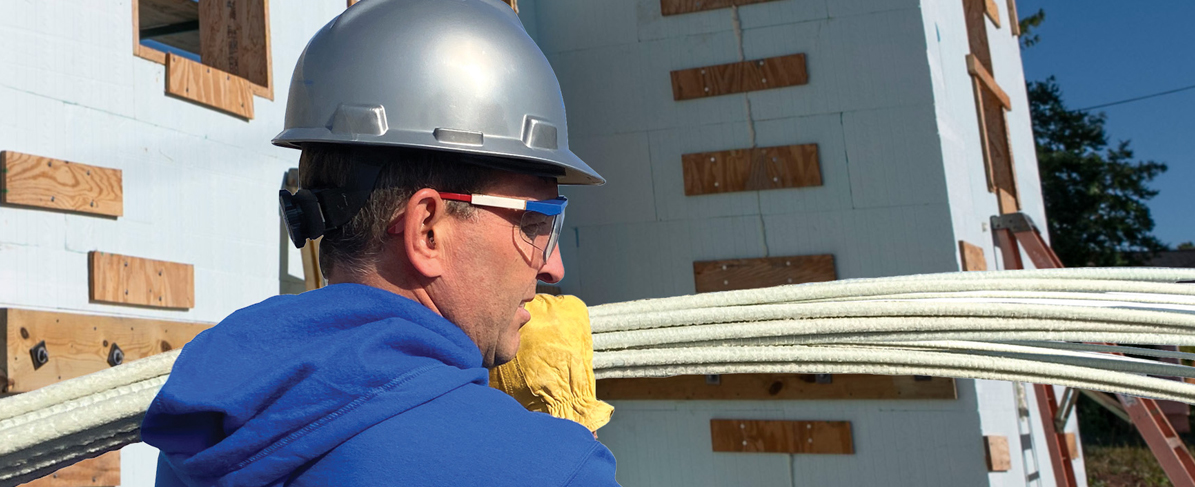
Move aside traditional metal rebar. A stronger, lighter-weight alternative is alleviating many of the challenges associated with steel reinforcing material. Keep reading to learn about GFRP rebar and its benefits in Insulated Concrete Form construction.
 What is a GFRP?
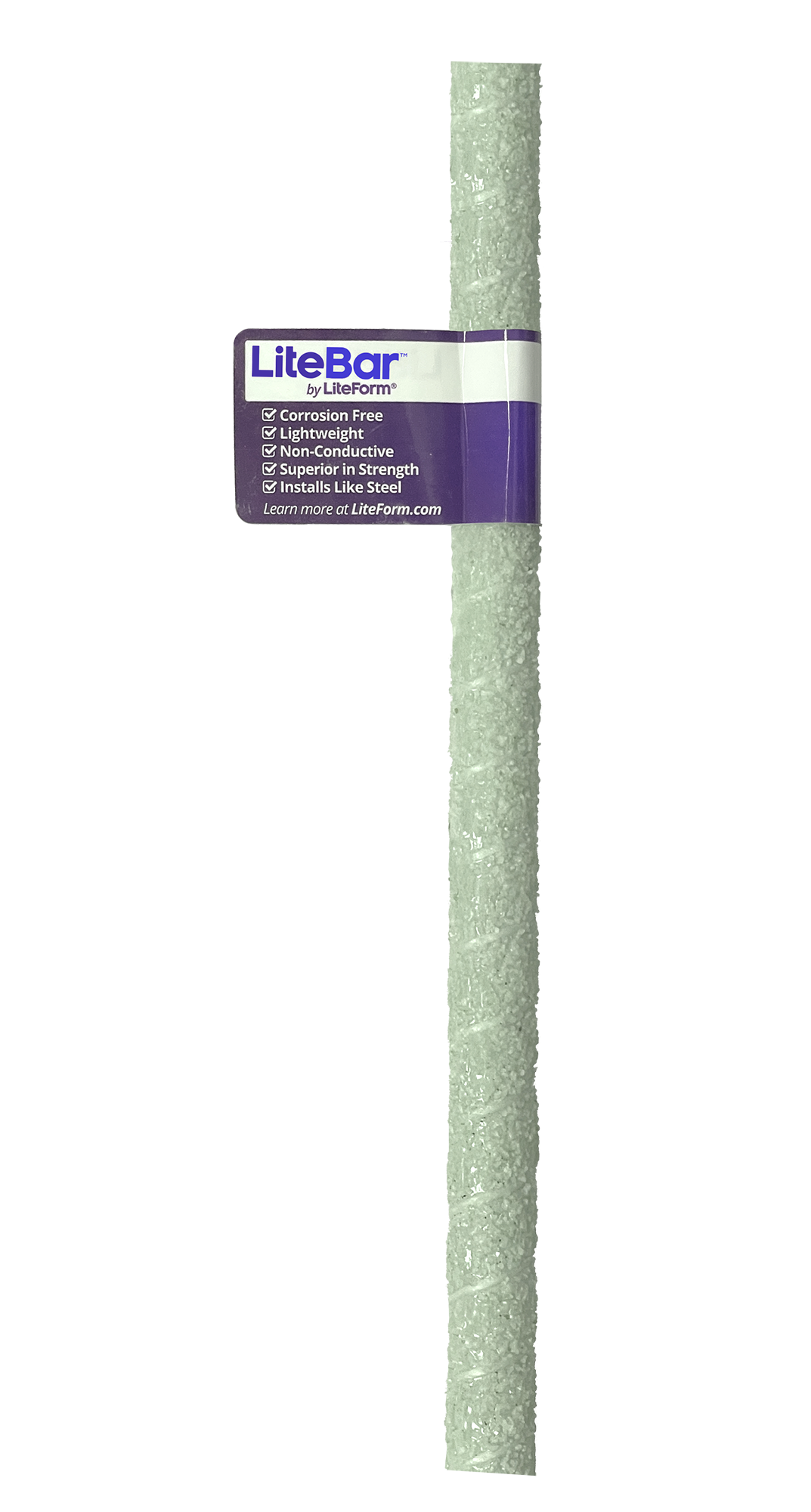
A Glass Fiber Reinforced Polymer, or GFRP, is a fiberglass alternative to metal rebar for use in reinforcing concrete in building construction. GFRP bars, like the lightweight LiteBar, are noncorrosive and designed for superior strength, rust resistance and electrical and thermal non-conductivity. In addition to these benefits, GFRP rebar installs just like metal rebar so there’s no learning curve.
Yes! GFRP bars can be installed in place of conventional steel rebar as vertical and horizontal reinforcements with Insulated Concrete Form wall construction, provided that the structure has been engineered specifically for GFRP.
GFRP bars come in a variety of sizes. LiteBar, for example, is available in 6mm, 8mm, 11 mm, 14 mm, 18 mm, 22 mm and 25 mm diameters, which are comparable to traditional rebar sizes and dimensions. For example, LiteBar’s #4 is equivalent to #4 steel rebar.
Yes, LiteBar is twice as strong in tensile strength. ½” LiteBar has a tensile strength of 126ksi, while ½” Grade 60 metal rebar is 60ksi.
Yes. A 2018 test at the University of Nebraska Lincoln compared the performance of GFRP bar to metal rebar in Insulated Concrete Form walls using 11 mm (7/16 in.) diameter GFRP and 13 mm (1/2 in.) diameter (#4) Grade 60 steel rebar. The results indicated that the GFRP reinforced ICF walls had comparable flexure capacity to the steel reinforced ICF wall, even with a smaller area of reinforcement. You can read the full test report here.
 Do GFRPs float when pouring concrete?
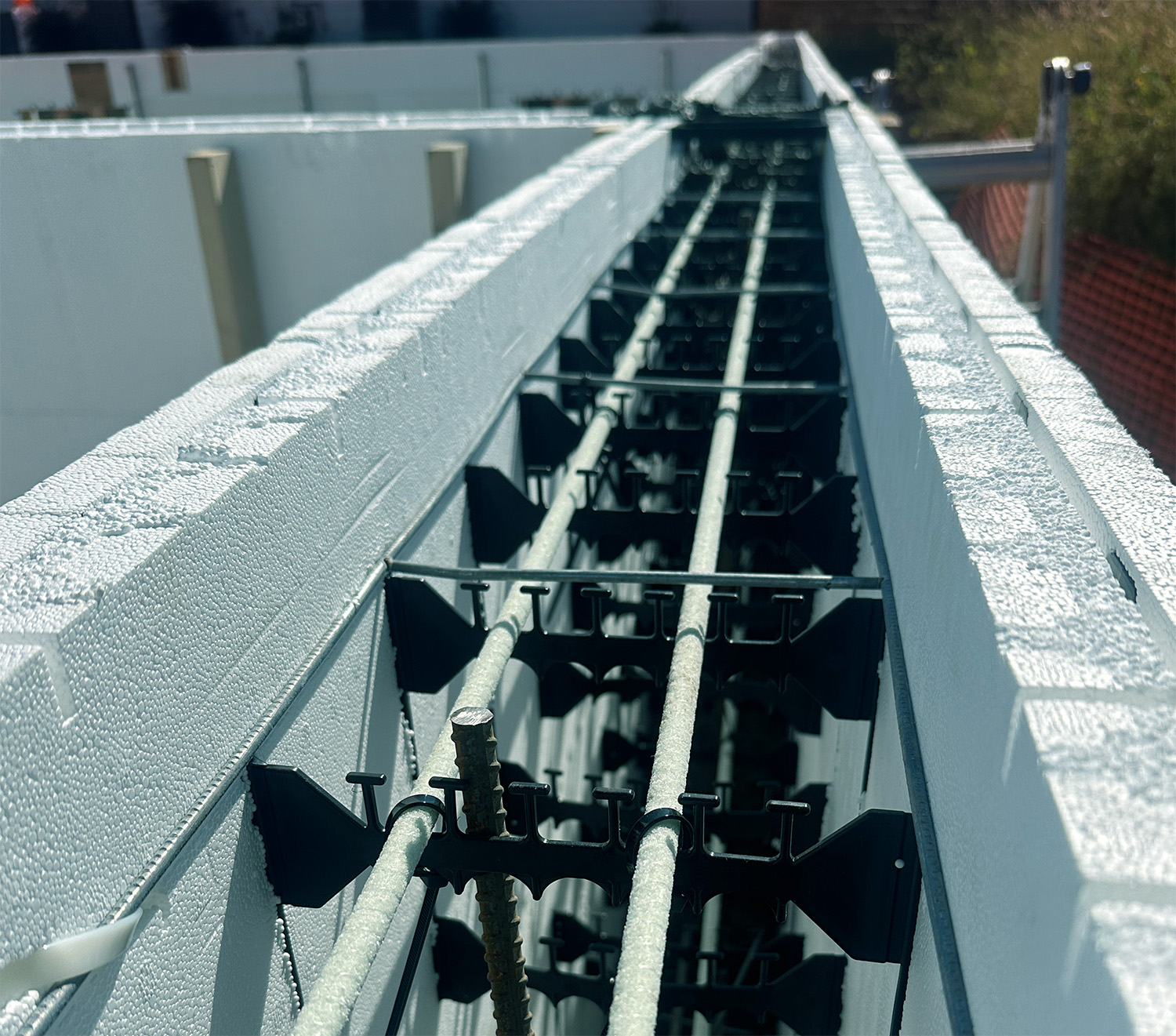
Whether you use metal rebar or a GFRP, there is potential for the product to float when pouring certain concrete mixes of high slump. To mitigate this risk of movement, it is recommended to use Insulated Concrete Forms like those from Nudura, which have a built-in web to hold the horizontal bars in place. Like steel rebar, GFRPs can be tied with wire to secure them in areas where additional support is needed.
While LiteBar cannot be bent in the field, pre-bent corner bars are available for purchase, which reduce jobsite time and labor. Talk to your local representative for recommendations when field bending cannot be avoided.
Yes. LiteBar can be cut with a manual rebar cutter, bolt cutter or grinder, although a circular saw or cutting wheel is recommended.
GFRP bars should be handled with gloves to reduce irritation and prevent abrasions. Safety glasses and dust masks are required when cutting the product to protect from the dust generation.