In North America and Europe, safety concerns have been growing around severe seismic activity, especially after 3 major earthquakes in 2020 across Croatia, Turkey and Greece caused more than 1 billion Euros in damage. So how can we design buildings to be safer during earthquakes?
Tremco Construction Products Group and their Nudura® Insulated Concrete Forms (ICFs) and framing brand have partnered with the Eucentre Foundation, a global leader in earthquake research and engineering located in Italy, to explore the building design options for earthquake-resistant construction. Starting with cyclic testing of Nudura ICF walls, this data will serve as a prototype for developing a Seismic Cyclical Shear Test Standard for reinforced concrete structures that will eventually be included in European design standards, Eurocode 8: Design of structures for earthquake resistance. The goal is to standardize building material performance testing to reduce the potential of infrastructure damage and loss of lives associated with seismic activity.
Europe (and other parts of the world) are especially vulnerable to the effects of earthquakes due to population density and the fact that much of the built environment pre-dates modern building codes. Nevertheless, for new construction, monolithic reinforced concrete walls have long been renowned for their durability in earthquake resistant buildings.
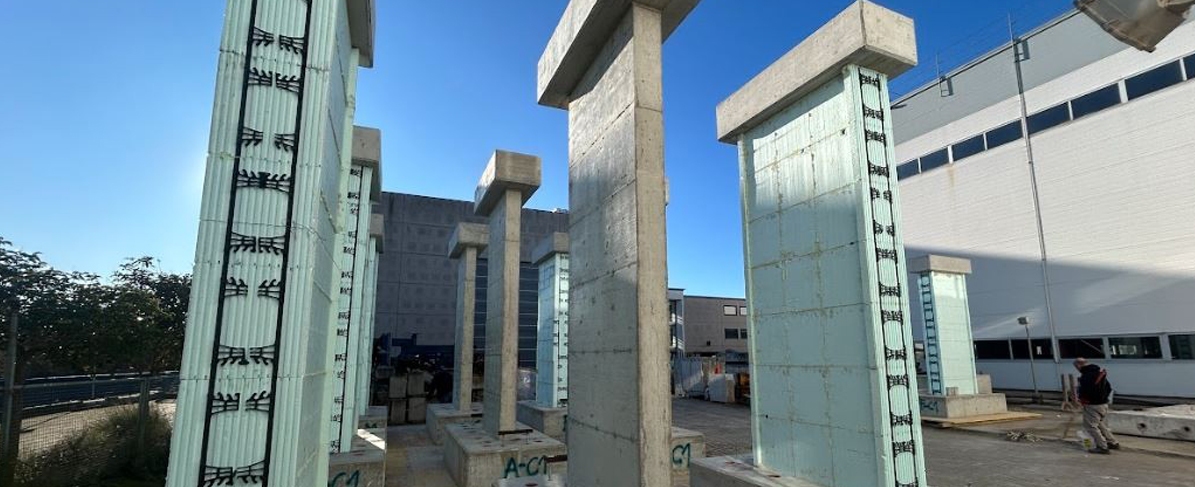
Similarly, Insulated Concrete Form wall assemblies, which are comprised of two sides of rigid EPS foam held together by engineered plastic webs and filled with reinforced concrete, have also been touted for their structural performance capabilities and resiliency to withstand extreme weather events.
In recent years, some in the engineering community have challenged ICF manufacturers to demonstrate the ability of their Insulated Concrete Form walls to meet or exceed the structural shear performance achieved by traditional cast in-place concrete wall systems. There was a notion that during an earthquake, the walls might crack along the plastic webs. To verify the Nudura ICF system’s ability to withstand the in-plane seismic forces, Tremco worked with the Eucentre Foundation to apply the North American dynamic seismic shear testing standard, ASTM E2126, typically conducted on framed wall systems, to test the performance of reinforced concrete wall assemblies, including the Nudura ICF system (Figure 1).
The ASTM E2126 test standard was developed primarily for the assessment of wall assemblies to gauge the seismic shear strength and ductility of the vertical elements of the wall and their capacity to resist lateral shear forces. These tests demonstrate the ability of the wall assembly to handle in-plane loads while maintaining their overall structural integrity.
At their Pavia, Italy facility, the Eucentre Foundation conducted numerous ASTM E2126 tests on both cast-in-place concrete test specimen walls, as well as Nudura ICF wall assemblies of equivalent size. The results show that the Insulated Concrete Form walls performed equally compared to the conventional concrete walls in reducing lateral sway when faced with seismic shear loads. The findings also indicate that the success of concrete shear walls is less dictated on whether the walls use insulated concrete forming systems or traditional formwork, but rather dependent on steel reinforcement layout and type of concrete utilized.
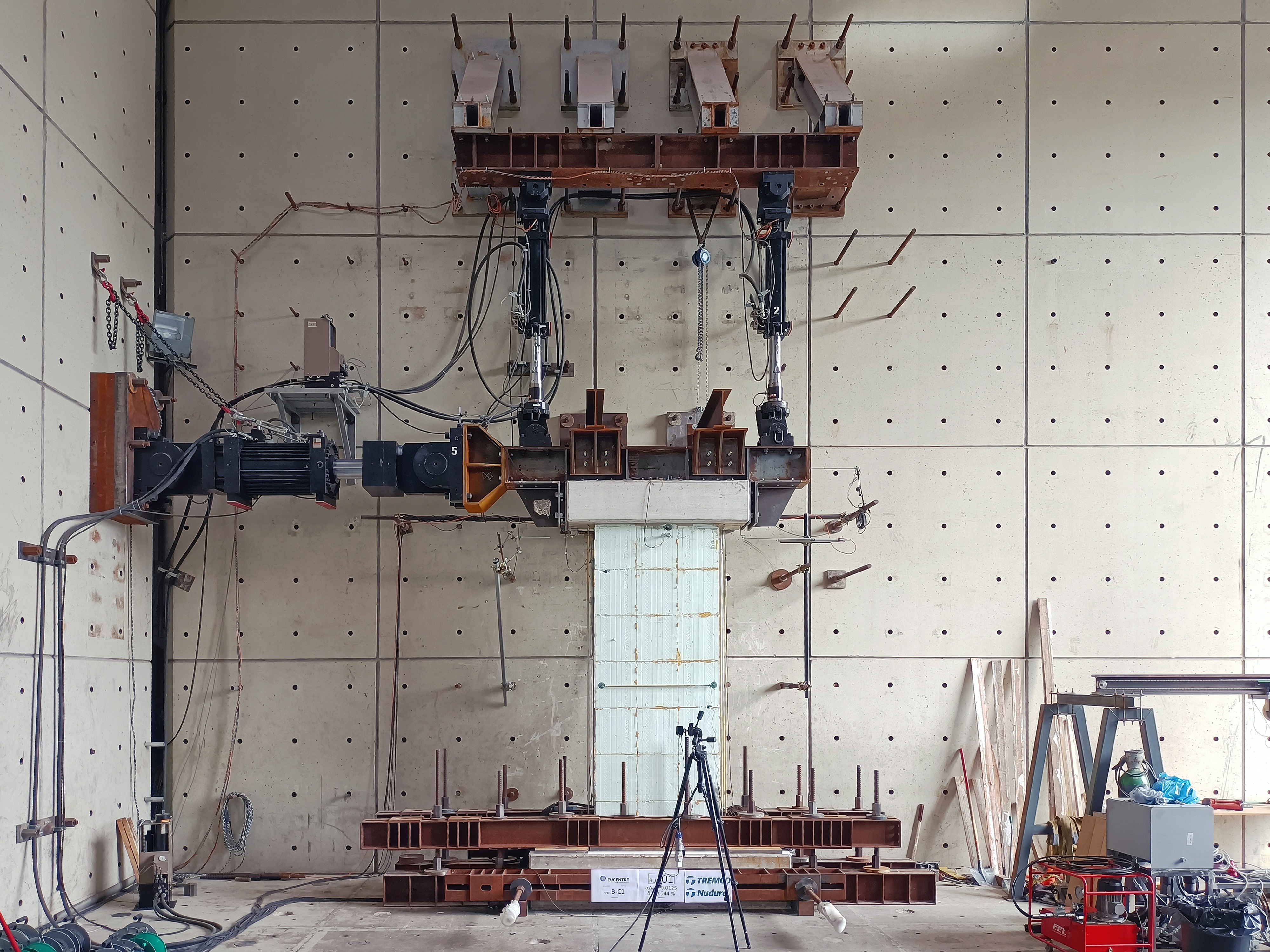
Figure 1: ASTM E2126 shear testing of a Nudura Insulated Concrete Form wall assembly at the Eucentre Foundation in Pavia, Italy.
With this data and learning in hand, the Nudura team and Eucentre Foundation are leading discussions for the development of a European-based seismic test standard. This testing has far-reaching applications, because a wall designed for high seismic resistance will perform well against many different hazards including blast loading, tsunami effects and high wind forces. Therefore, the testing procedures behind seismic buildings can benefit not only those regions most affected by seismic activity, but communities around the world.
Nudura ICFs are effective for creating a watertight building envelope when used for below-grade and above-grade walls. These wall assemblies have already demonstrated their strength against high winds up to 250 mph (402 kph) and are qualified for use in ICC 500 storm shelters and FEMA safe rooms. Impact testing also verified that the Nudura ICF walls are impenetrable from wind-blown debris. The EPS foam layer creates a buffer to slow the flying debris while the concrete core remains undamaged. Nudura ICF wall systems are even fire rated for up to 4 hours.
The ability of Nudura to provide structural strength, resiliency to high wind from tornados and hurricanes and exemplary energy performance are key reasons that customers have chosen to build with Nudura ICFs. These features were especially important for the Divi Little Bay Resort in St. Maarten (Figure 2) and the Mount Washington Chalet in British Columbia which experience extreme weather at both ends of the spectrum. Nudura Insulated Concrete Form walls are also a system of choice for meeting the US Department of Defense’s rigorous standards for Anti-Terrorism Force Protection and Resistance to Progressive Collapse. They have therefore been incorporated into a variety of military installations such as the Kirtland Flight Simulator Facility in New Mexico and the Scoffield Army Barracks in Hawaii.
Now that Nudura Insulated Concrete Form walls have successfully passed ASTM E2126, validating that they can resist seismic activity without compromising structural integrity, they can be used confidently to construct earthquake resistant foundations and buildings too.
Together, Nudura and ICF industry testing documentation, which includes UL and Canada Fire Listings, FEMA approval, ICC 500 certification, NFPA testing and energy performance testing, tells a compelling story that Nudura ICF high performance walls are an ideal building method for disaster resilient structures that enable greater risk mitigation, stronger occupant protection and faster recovery times for communities faced with tornadoes, hurricanes, wildfires or earthquakes.
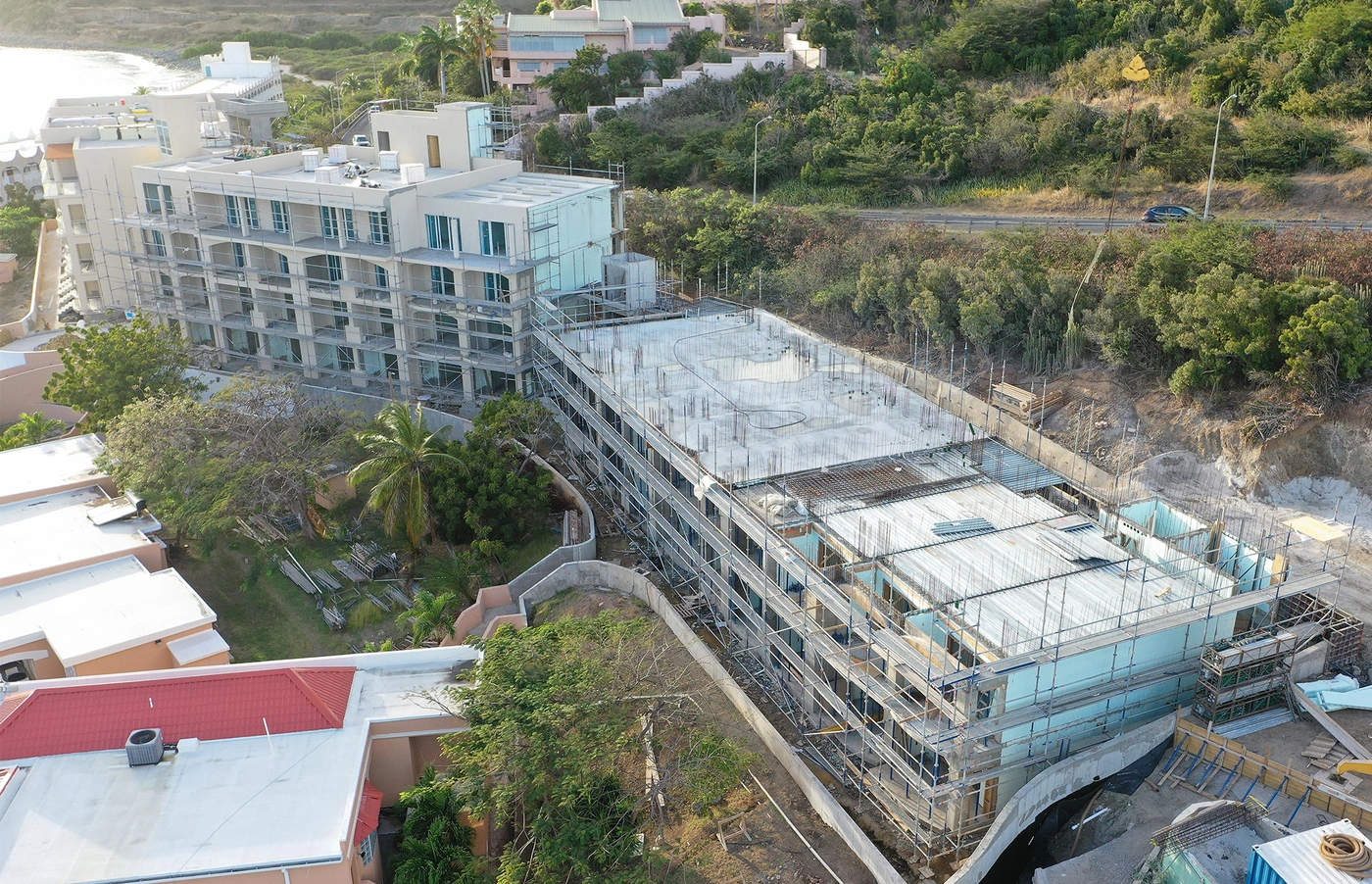
Figure 2: The Divi Little Bay Resort in St. Maarten during its construction with Nudura ICFs.
Rigorous testing at the internationally-renowned Eucentre Foundation laboratory has proven that during seismic activity, reinforced concrete walls formed with Nudura ICFs will perform just as effectively as traditionally formed reinforced concrete walls incorporating metal ties. With this data, Nudura Insulated Concrete Forms help inform the global standard for earthquake-resistant construction and buildings that require robust structural performance to safeguard both infrastructure and lives from seismic activity.