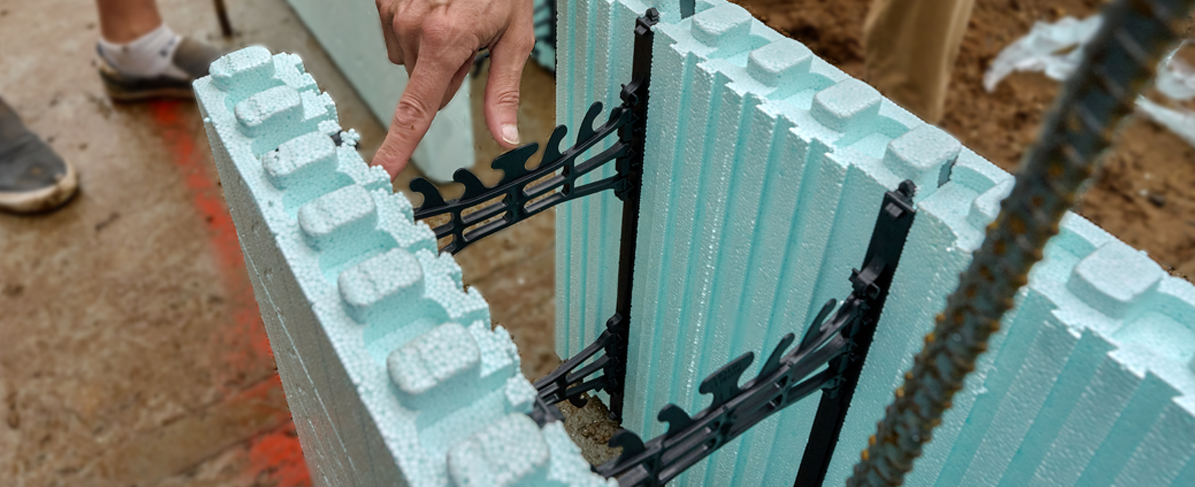
Choosing the right concrete core thickness for Insulated Concrete Form (ICF) assemblies affects structural integrity, constructability, cost and how confidently a building design can respond to site loads. For architects, engineers and builders, it is important to consider the various circumstances that impact your project’s ideal wall thickness, remembering too that various concrete core sizes can be used together on the same job.
The selection depends on a number of elements, including the building’s height, the wall’s location and its anticipated vertical and horizontal loads. Here’s how different ICF cores are frequently used and what factors should drive your decision.
Download Our Core Thickness Quick Guide
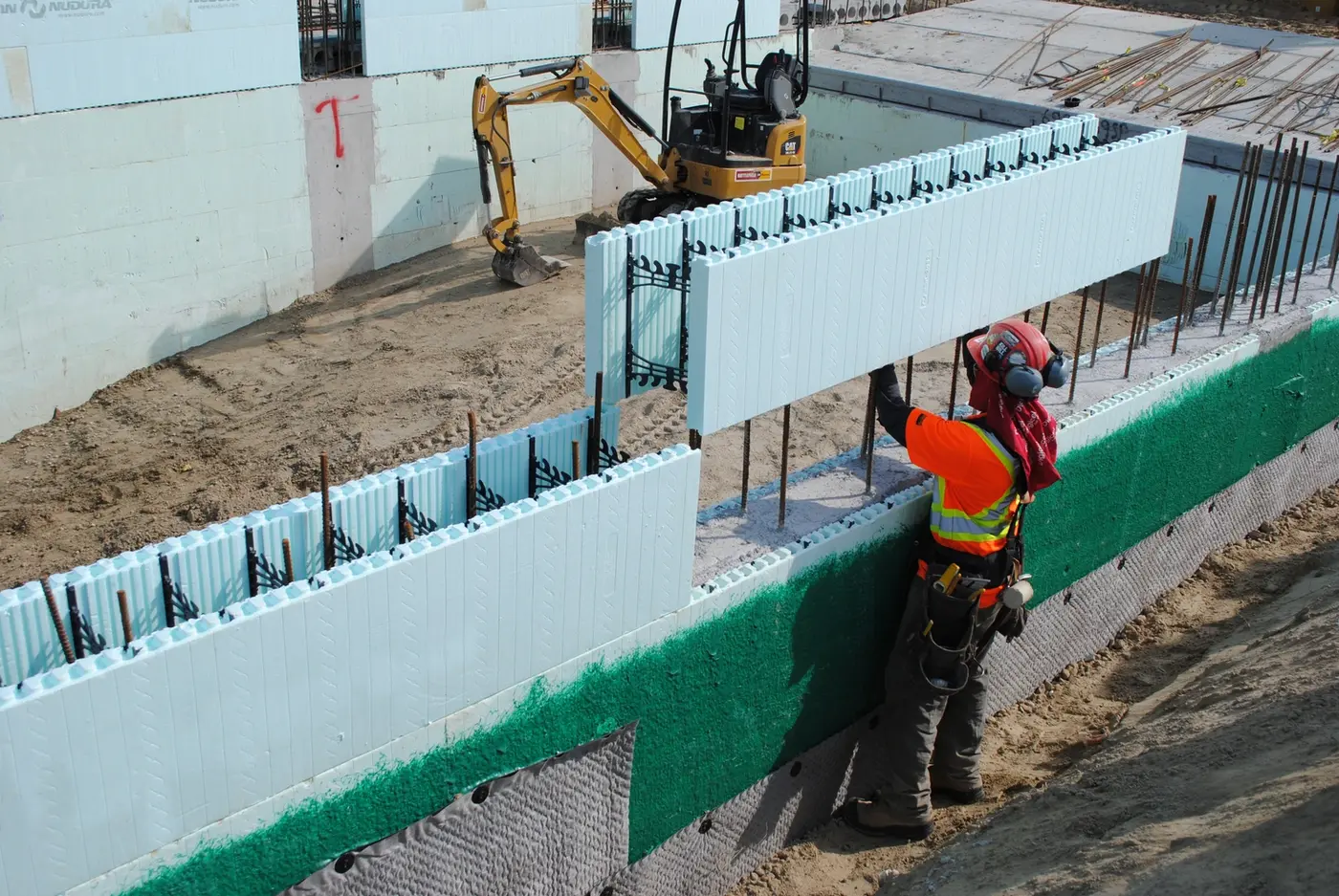 What drives ICF core thickness selection?
A common mistake is to generalize that “residential means 6-inch (152 mm)” or “commercial means 10-inch (254 mm).” There are many other important project-specific variables to account for to accurately determine the ideal ICF concrete core size for your building.
Here are some of the items to consider when selecting your Insulated Concrete Form wall thickness:
A wall that performs well in a low-rise inland residential project may not be suitable for a coastal multi-story building. The same is true below grade, where backfill height, soil type and lateral earth pressure can quickly change what makes sense.
That is why thickness charts are helpful for budgeting and preliminary design, but not as a substitute for engineering.
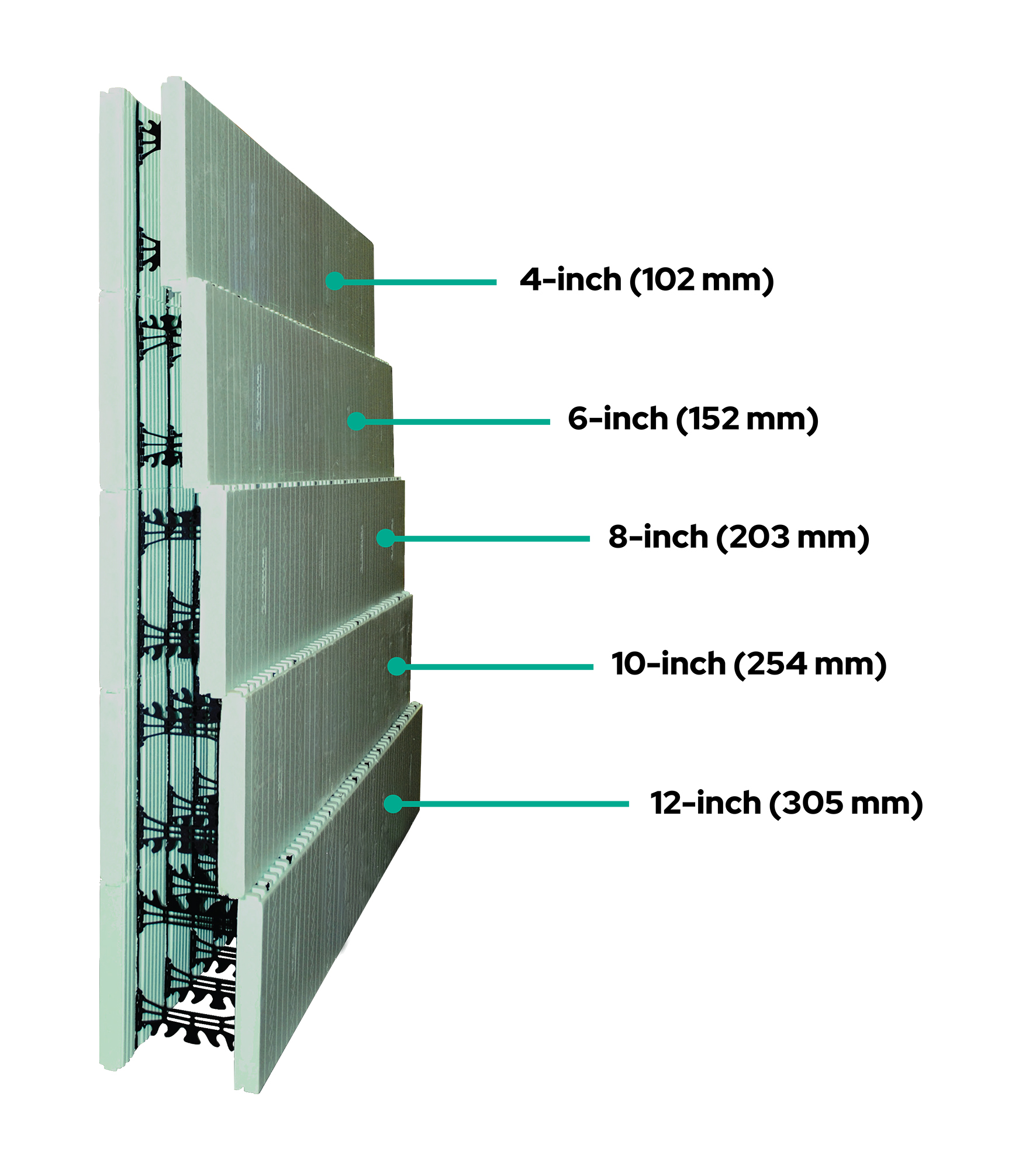 4-inch (102 mm) ICF cores
The small 4-inch (102 mm) concrete core has a limited role in the market. It is exclusively used for above-grade walls and is typically associated with one-story construction. It may appear in two-story applications, but that is rare due to its reduced ability to withstand heavy loads. The 4-inch (102 mm) ICF blocks are most often seen in lighter duty applications where wall heights and loads are modest.
The 6-inch core (152 mm) is one of the most common choices in both residential and light commercial work because it strikes a balance between structural capacity and cost. It is best suited for single-family homes, low-rise multi-family and mixed-use buildings, like the Lewis Building in Newburyport, Massachusetts.
It is also a frequent starting point for foundation walls, though site-specific geotechnical and structural conditions must still be factored in for below-grade uses.
The 8-inch core (203 mm) is another frequent choice and is the next step up from the 6-inch (152 mm) when loads, heights or project scale increase.
In residential work, 8-inch (203 mm) ICFs may be selected when designers want more structural security or when site and loading conditions are less forgiving. In some instances, the 8-inch (203 mm) concrete core may be used for homes below grade and then transition to the 6-inch (152 mm) core above grade.
For commercial projects, the 8-inch (203 mm) concrete core is widely used for taller walls, larger open spaces and lower levels of multi-story buildings.
A 10-inch (254 mm) core typically enters the conversation for more demanding commercial and multi-story applications.
These ICF walls are often considered where there are taller above-grade walls, heavier loads or more complex structural needs. They may also be used in conditions such as parking structures, large assembly spaces and lower levels of taller buildings.
As buildings rise, the concrete core thickness can change to accommodate the different strength and load requirements. So some structures could be engineered to have a 10-inch (254 mm) concrete core for the first few stories and then transition into a different core thickness for the higher levels.
 12-inch (305 mm) ICF cores
A 12-inch (305 mm) ICF is used in commercial applications to respond to the most significant structural and site demands. It is considered for deep foundation walls, industrial conditions, safe rooms and storm shelters and especially tall or heavily loaded walls.
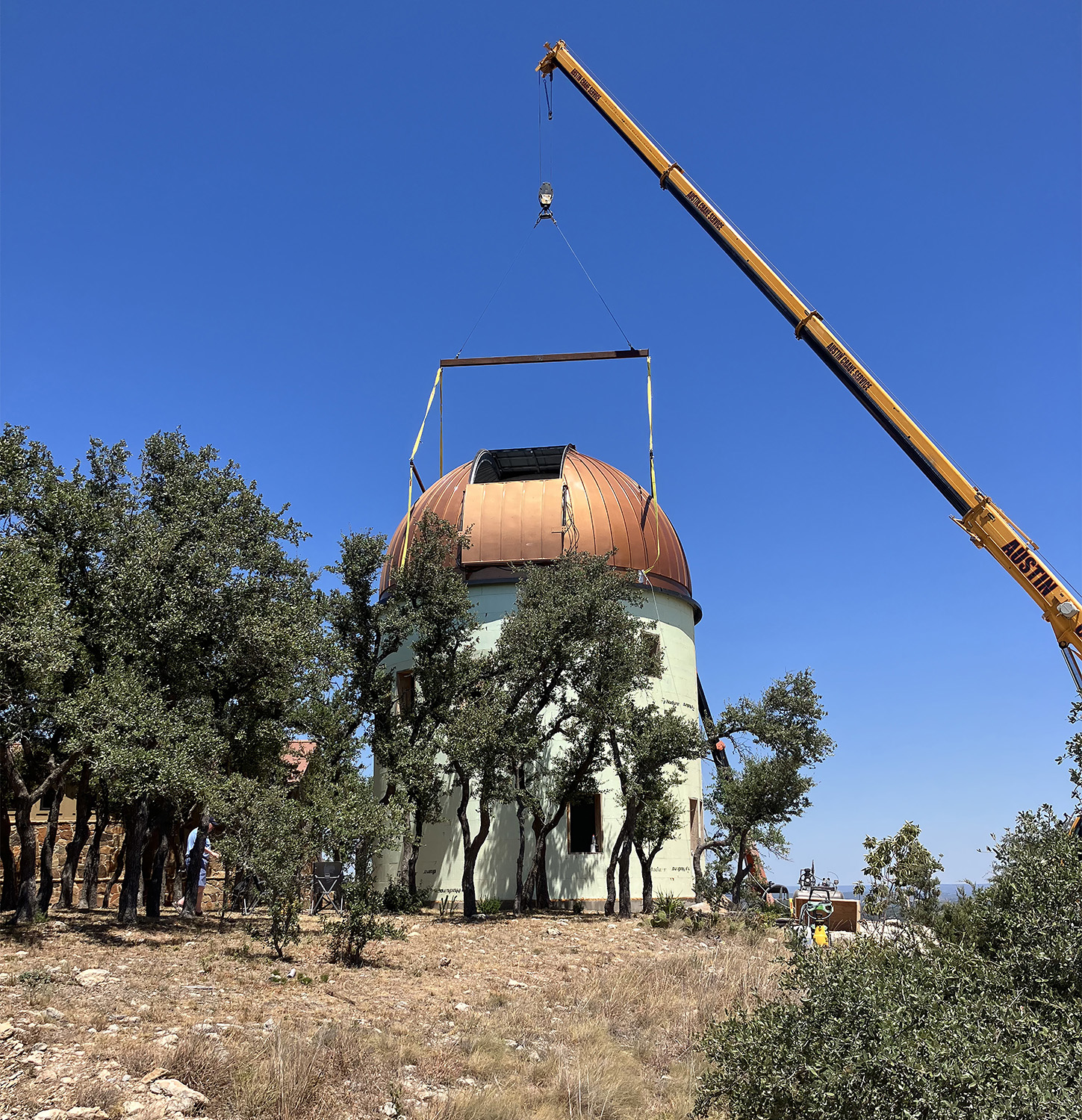
For example, the Bristol Public Safety Building was constructed into a sloping hill and utilized a 12-inch (305 mm) concrete core ICF to secure the backfill, while the GSR Observatory used the 12-inch (305 mm) core for the 3-story curved walls to withstand the weight of the domed copper roof.
Need even greater structural strength? You can build ICF walls beyond a 12-inch (305 mm) concrete core. In special applications, it is possible to incorporate larger width Insulated Concrete Forms by assembling the forms on-site.
Choosing the core thickness for your Insulated Concrete Form wall is about matching structural wall capacity to your specific project demands. As a rule of thumb, 4-inch (102 mm) ICF cores have limited above-grade use, 6-inch (152 mm) and 8-inch (203 mm) cores are common in residential and many commercial applications, and 10-inch (254 mm) and 12-inch (305 mm) cores are more often used for taller, heavier construction projects.
Use these ranges as preliminary guidance, then confirm the final wall section through project-specific structural and geotechnical review. Reference Nudura’s Pre-Design Criteria page for more guidance.