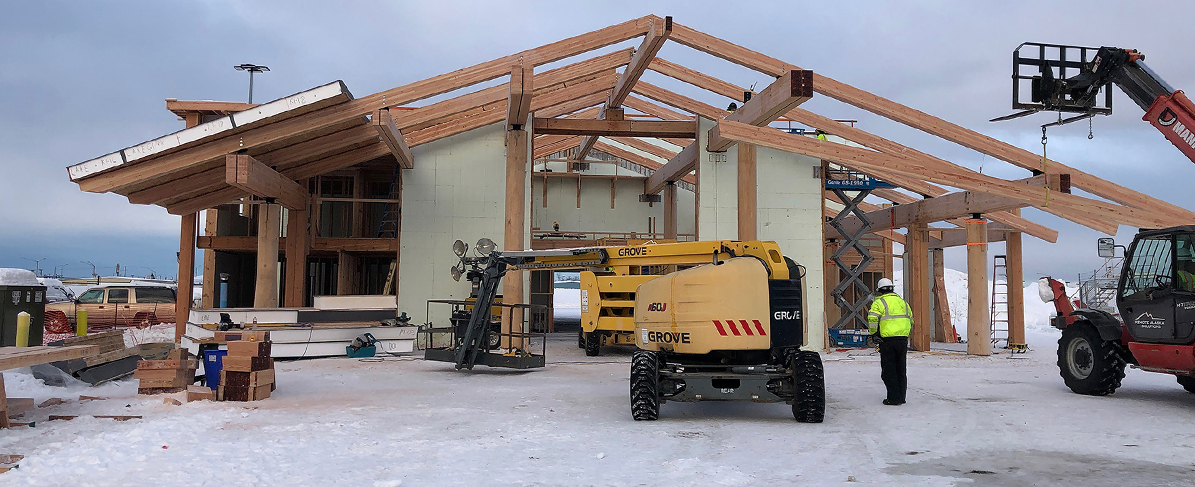
For any build team, the winter months and cold climates pose additional challenges to active jobsites, such as excess moisture, difficult working conditions and frozen building materials. When constructing above-grade structural walls, there are added factors to consider to ensure a weather-tight building envelope.
Insulated Concrete Forms (ICFs) can lessen these cold-weather challenges and ultimately speed your construction timeline. That's why ICF projects are becoming increasingly common in northern climates, such as Alaska and mountainous areas of Colorado and Canada.
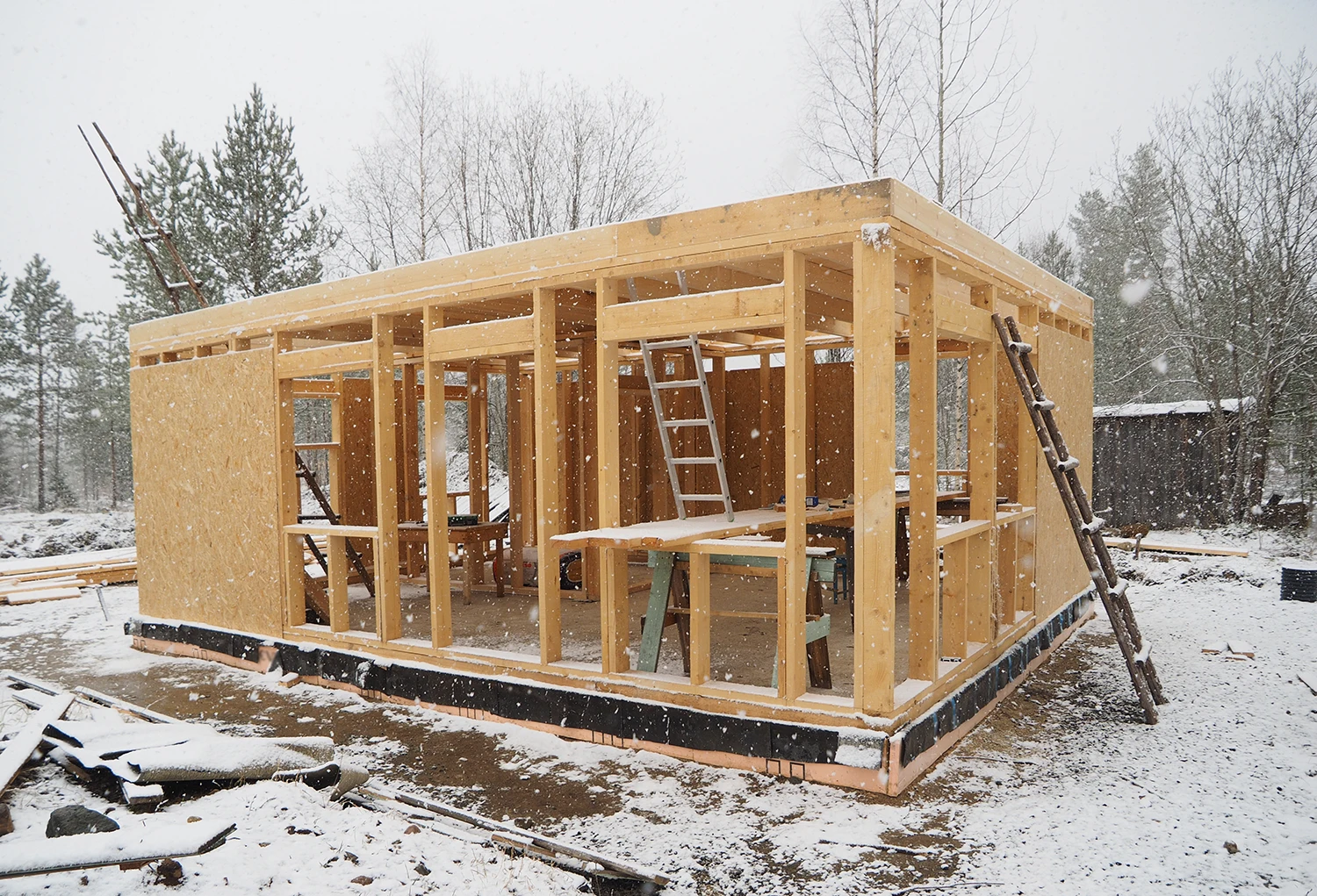
Cold temperatures and inclement weather are a hinderance for a lot of building materials and can set back a project’s progress. Conventional construction with wood framing is especially vulnerable to issues caused by winter weather.
After a snowstorm, for example, subfloors must be cleared for wall framing, snow and ice need to be removed from material for assembly and bottom wall plate locations should be scraped if ice is present to alleviate wall settlement.
Installers also need to watch out for frost, condensation and saturation of the studs and wall sheathing. Excess moisture can lead to mold and rot or warping of the studs. It can even create “pops” in the drywall which occurs when movement in the stud pushes or pulls the screw fastening the drywall, resulting in a defect of the finished product.
In addition to end-result challenges, compressor lines can freeze for air-nailers, battery life is significantly shortened for drills and nail guns and installers may need more frequent breaks as they get cold. All these factors can add up, lengthening construction times, risking call-backs and losing revenue for the building owners.
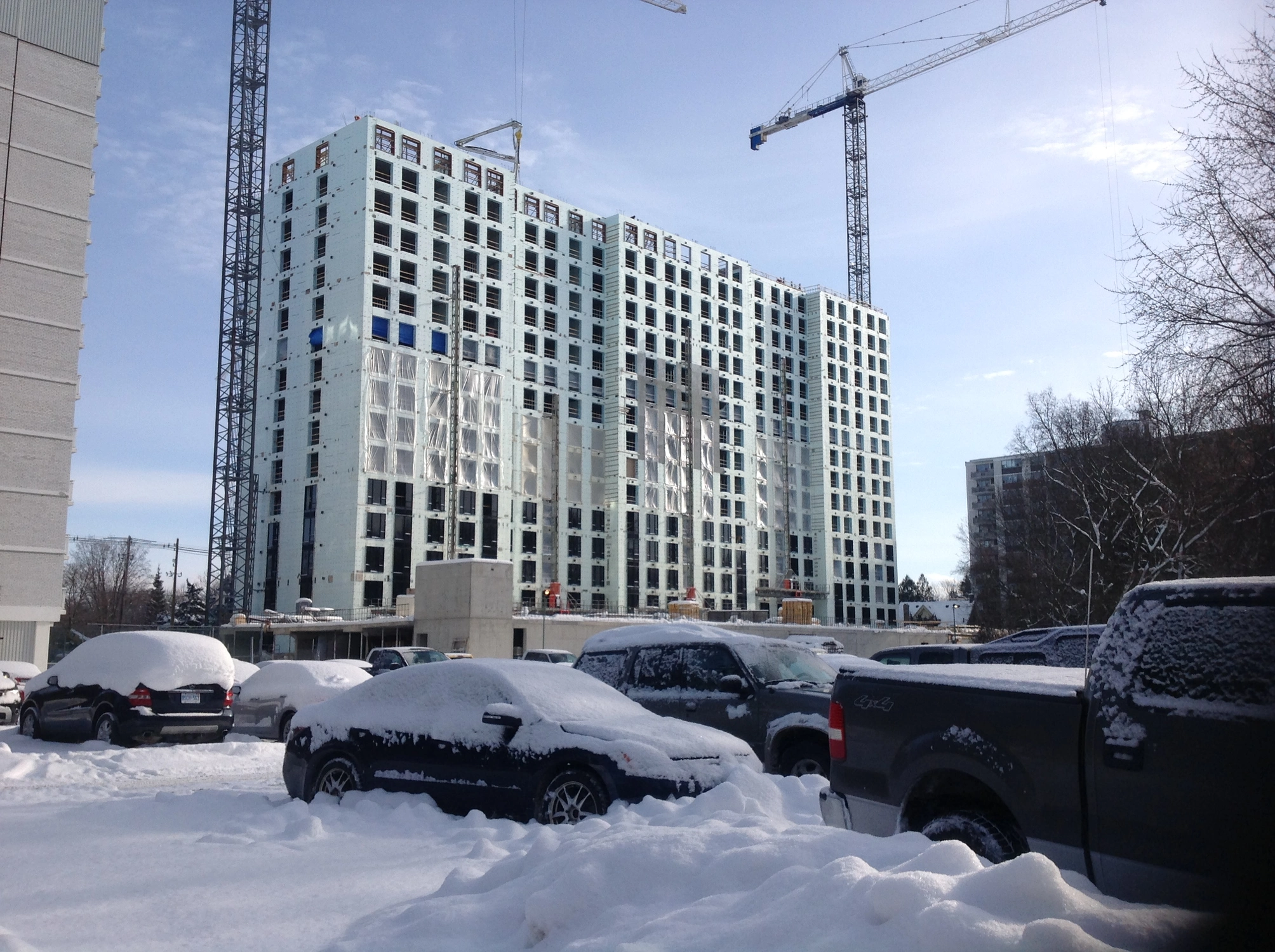
ICF construction benefits the speed of a project from the start. Stacking the light-weight ICF blocks is easy in any temperature and the surface is not harmed in the face of rain or snow. The two sides of continuous insulation and the exothermic reaction of concrete curing enables pouring concrete in cold weather. Yes, you can pour concrete in the winter with ICFs!
From there, the ICF walls immediately insulate the building, as the inherent thermal mass requires little heat to climatize the structure and makes the space more comfortable for workers and therefore speeds interior finishing. And because no additional air barriers or cladding are required to make the structure weather-tight, the sub-trades can begin straight away.
If snow is in the forecast, minor precautions must still be taken with ICF construction. First, tarps or similar materials should protect the top of wall to prevent snow and ice from accumulating within the wall cavity. Frost should also be cleared before installing any products to the EPS foam insulation surface, as any moisture can be a bond breaker. Thankfully, these are easy accommodations given the time savings throughout the rest of the ICF build process.
Building construction is often unavoidable in the winter months. Cold temperatures can complicate material application and slow down a project significantly. For external wall construction, Insulated Concrete Forms are preferred to wood-framing since they are easier and faster to install, have fewer moisture considerations and insulate the building substantially faster. Ultimately, ICF construction speeds the shell dry-in process, allowing the interior trades to begin sooner and advancing the building timeline.